


精智达创始人、董事长张滨接受《中国日报》APEC系列专访

2026年亚太经合组织(APEC)领导人会议周在深圳举行之际,精智达创始人、董事长张滨作为深圳企业代表,接受《中国日报》(China Daily)APEC主题专访,围绕人工智能时代半导体测试检测的产业价值、技术创新与产业化发展、全球产业协同及亚太区域合作等话题,分享了对行业发展趋势的思考,以及精智达在平台化研发、技术成果产业化和全球合作方面的探索与实践。
张滨在专访中表示,技术的真正价值,不仅在于创新链前端的突破,更在于将创新转化为产业动能,让技术进步成为可验证、可复制、可共享的发展成果。随着人工智能加速推动产业变革,半导体测试正从单点验证走向系统协同,其价值不断向研发与制造的更多环节延伸。面向未来,精智达将秉持“创新测试的确定性伙伴”的品牌定位,以持续的技术积累与开放的产业协作,携手全球合作伙伴,推动更多创新成果走向规模量产,为亚太地区的共同繁荣贡献力量。
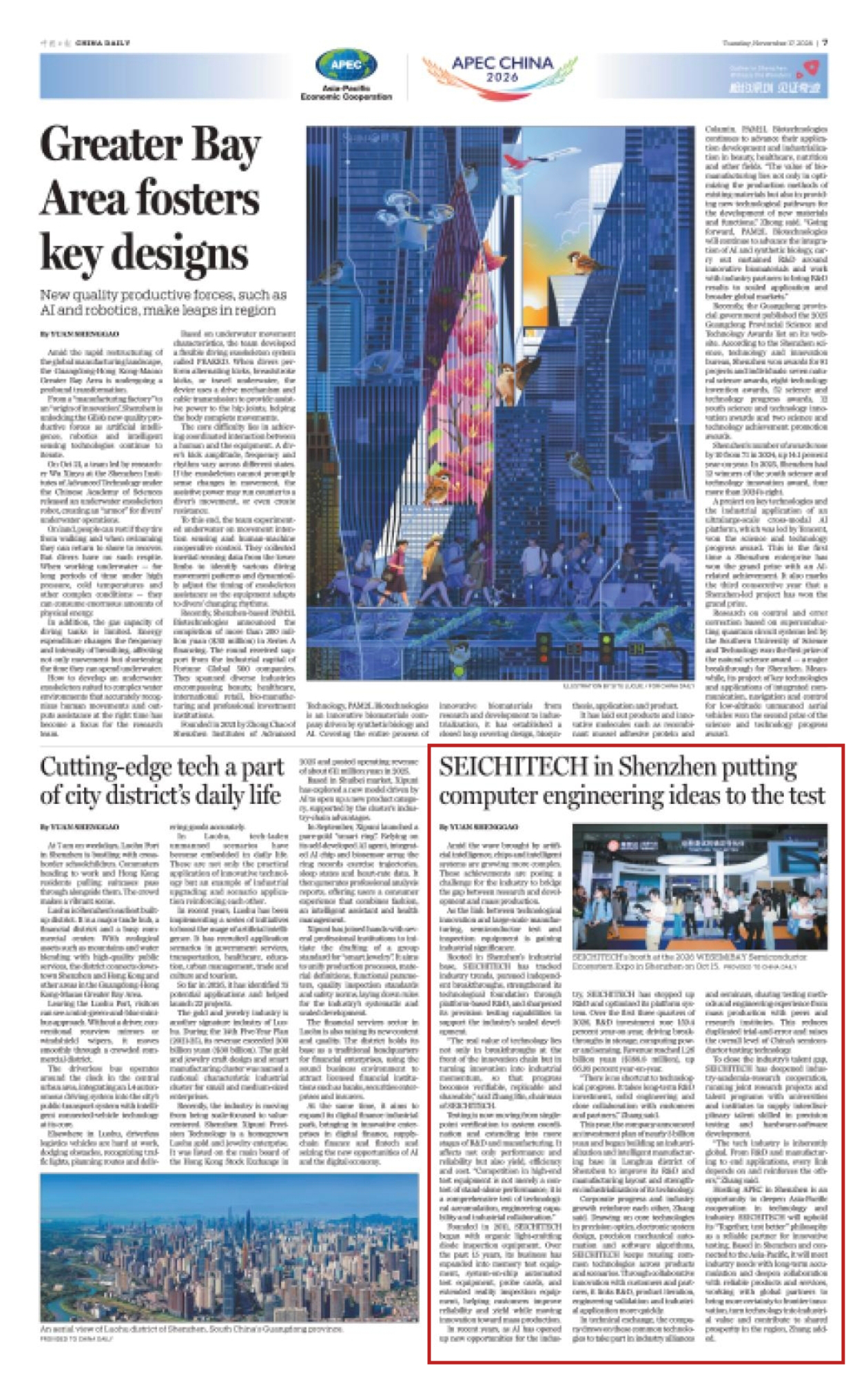
《中国日报》APEC专题报道
报道译文
“以可靠测试支撑创新,让技术成果成为共同繁荣的力量”
人工智能浪潮下,全球科技产业加速演进。随着芯片及智能系统的复杂度持续攀升,如何推动技术成果跨越从研发到量产的距离,成为产业面临的重要课题。
作为连接技术创新与规模制造的关键环节,半导体测试检测设备的产业价值日益凸显。
根植于深圳产业沃土,精智达紧跟行业发展趋势,坚持自主技术攻坚,以平台化研发创新夯实技术底座,持续提升精密测试能力,为行业规模化发展提供有力支撑。
“技术的真正价值,不止于创新链前端的突破,更在于能否把创新势能转化为产业动能,让技术进步成为可验证、可复制、可共享的发展成果。”深圳精智达技术股份有限公司董事长张滨表示。
当前,测试正从单点验证走向系统协同,并向研发与制造的更多环节延伸,既关乎产品性能与可靠性,也影响生产良率、效率与成本。“高端测试设备的竞争,不只是单机性能的比拼,更是技术积累、工程能力与产业协同的综合考验。”
成立于2011年的精智达,十五年间业务版图拓展至存储芯片测试设备、算力芯片测试设备、探针卡及XR检测设备、AMOLED检测设备等领域,帮助客户提升产品可靠性,改善生产良率与效率,推动技术创新更加稳定地走向规模量产。
近年来,面对人工智能带来的产业机遇,精智达持续加大研发投入,深化平台化研发体系建设。2026年前三季度,公司研发投入同比增长159.4%,高比例研发投入推动企业在存力、算力、感知等关键方向不断实现技术突破;2026年前三季度实现营业收入12.57亿元,同比增长66.95%。
“技术进步没有捷径,靠的是长期研发投入、扎实工程积累以及与客户和产业伙伴的紧密协作。”张滨提到。
今年,精智达宣布近30亿元的战略投资计划,并在深圳龙华启动产业化智造基地建设,进一步完善研发与制造布局,提升技术成果产业化能力。
张滨认为,企业进步和行业发展是一个“互促双强”的过程。近年来,精智达持续推动共性技术跨产品、跨场景复用,并通过与客户及产业伙伴的协同创新,加快技术研发、产品迭代、工程验证与产业化应用的衔接。
在技术协同交流层面,公司依托平台化研发沉淀的共性技术,积极参与产业联盟、技术研讨,把量产场景中沉淀的测试方法论、工程实践经验,与同行和科研机构交流共享,减少行业重复试错,推动国内半导体测试检测技术整体水平提升。
面向产业人才缺口,精智达深化产学研联动,与高校、科研院所开展课题合作及人才联合培养,为行业输送精密测试、软硬件开发复合型技术人才提供支撑。
“科技产业具有全球化属性,从研发、制造到终端应用,各环节相互依存、彼此成就。”张滨表示。
最后,张滨补充道,APEC会议在深圳举办,为深化亚太区域科技产业交流、拓展创新合作提供了重要契机。精智达将秉持“创新测试的确定性伙伴”理念,立足深圳、链接亚太,以长期技术积累回应产业需求,以可靠产品与服务深化产业协作,携手全球产业伙伴,为前沿科技创新提供更多确定性,推动技术成果更好地转化为产业价值,为亚太地区共同繁荣贡献力量。
报道原文
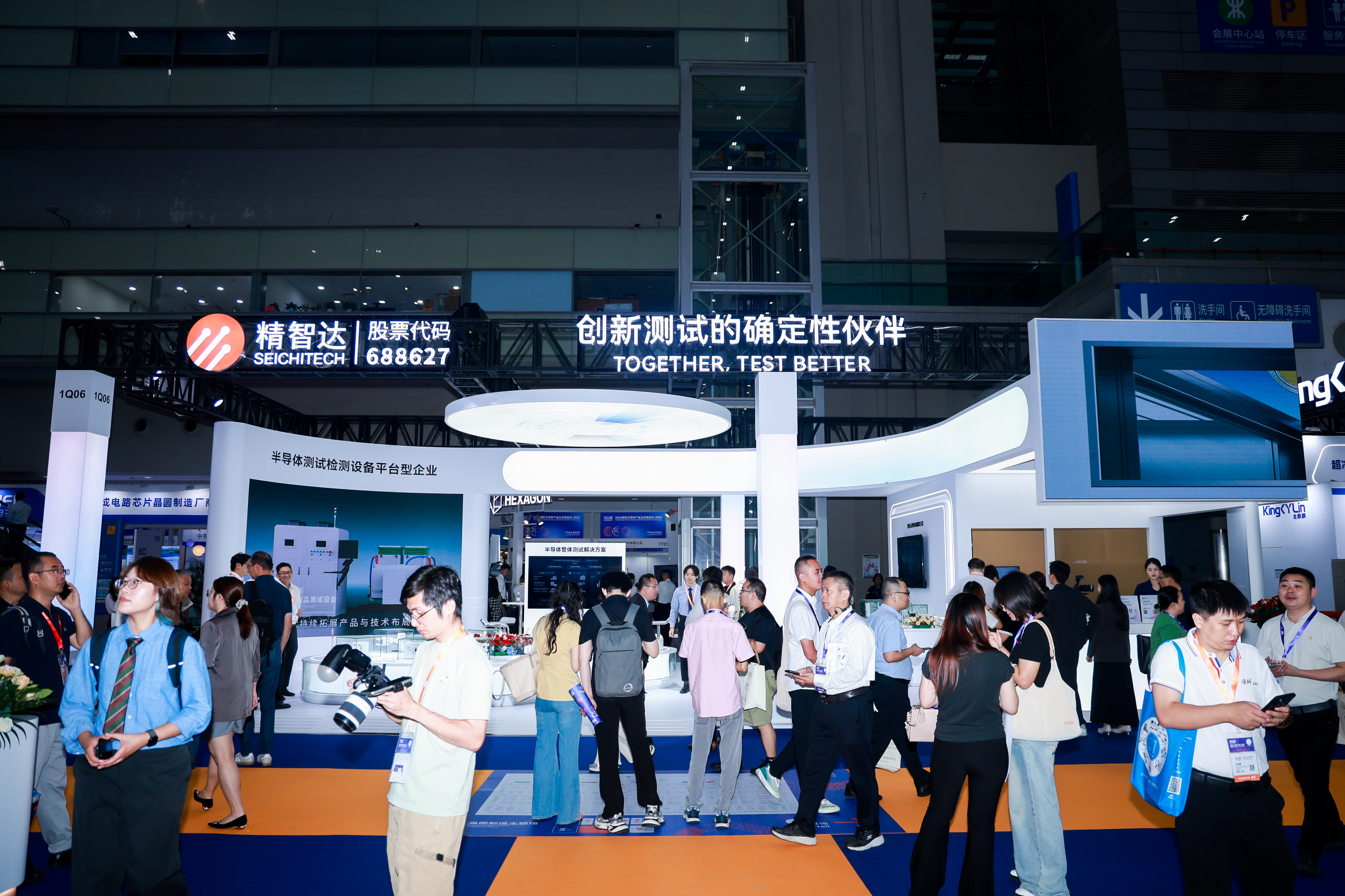
SEICHITECH’s booth at the 2026 WESEMiBAY Semiconductor Ecosystem Expo in Shenzhen on Oct 15.
“SEICHITECH in Shenzhen putting computer engineering ideas to the test”
Amid the wave brought by artificial intelligence, chips and intelligent systems are growing more complex. These achievements are posing a challenge for the industry to bridge the gap between research and development and mass production.
As the link between technological innovation and large-scale manufacturing, semiconductor test and inspection equipment is gaining industrial significance.
Rooted in Shenzhen’s industrial base, SEICHITECH has tracked industry trends, pursued independent breakthroughs, strengthened its technological foundation through platform-based R&D, and sharpened its precision testing capabilities to support the industry’s scaled development.
“The real value of technology lies not only in breakthroughs at the front of the innovation chain but in turning innovation into industrial momentum, so that progress becomes verifiable, replicable and shareable,” said Zhang Bin, chairman of SEICHITECH.
Testing is now moving from single-point verification to system coordination and extending into more stages of R&D and manufacturing. It affects not only performance and reliability but also yield, efficiency and cost. “Competition in high-end test equipment is not merely a contest of stand-alone performance; it is a comprehensive test of technological accumulation, engineering capability and industrial collaboration.”
Founded in 2011, SEICHITECH has expanded its business into memory test equipment, system-on-chip automated test equipment, probe cards, and extended reality inspection equipment, helping customers improve reliability and yield while moving innovation toward mass production.
In recent years, as AI has opened up new opportunities for the industry, SEICHITECH has stepped up R&D and optimized its platform system. Over the first three quarters of 2026, R&D investment rose 159.4 percent year-on-year, driving breakthroughs in storage, computing power and sensing. Revenue reached 1.26 billion yuan ($188.8 million), up 66.95 percent year-on-year.
“There is no shortcut to technological progress. It takes long-term R&D investment, solid engineering and close collaboration with customers and partners,” Zhang said.
This year, the company announced an investment plan of nearly 3 billion yuan and began building an industrialization and intelligent manufacturing base in Longhua district of Shenzhen to improve its R&D and manufacturing layout and strengthen industrialization of its technology.
Corporate progress and industry growth reinforce each other, Zhang said. Over the past few years, SEICHITECH has been reusing common technologies across products and scenarios. Through collaborative innovation with customers and partners, it links R&D, product iteration, engineering validation and industrial application more quickly.
In technical exchange, the company draws on these common technologies to take part in industry alliances and seminars, sharing testing methods and engineering experience from mass production with peers and research institutes. This reduces duplicated trial-and-error and raises the overall level of China’s semiconductor testing technology.
To close the industry’s talent gap, SEICHITECH has deepened industry-academia-research cooperation, running joint research projects and talent programs with universities and institutes to supply interdisciplinary talent skilled in precision testing and hardware-software development.
“The tech industry is inherently global. From R&D and manufacturing to end applications, every link depends on and reinforces the others,” Zhang said.
Hosting APEC in Shenzhen is an opportunity to deepen Asia-Pacific cooperation in technology and industry. SEICHITECH will uphold its “Together, test better” philosophy as a reliable partner for innovative testing. Based in Shenzhen and connected to the Asia-Pacific, it will meet industry needs with long-term accumulation and deepen collaboration with reliable products and services, working with global partners to bring more certainty to frontier innovation, turn technology into industrial value and contribute to shared prosperity in the region, Zhang added.


